HomeFAQs

FREQUENTLY ASKED QUESTIONS (FAQs) ABOUT GEMTESA
Female patient talking to male doctor

Have questions about overactive bladder (OAB) and GEMTESA? Find answers to frequently asked questions below

1. What is OAB?

When you're living with OAB, your bladder muscles may suddenly contract too frequently and too often, even when your bladder isn't full, creating an urgent feeling that you need to urinate.

2. What causes OAB symptoms?

As your bladder fills, nerve signals in your brain trigger your need to urinate. These signals tell your bladder to:

  • •Relax the muscles of the pelvic floor and urethra
  • •Contract (squeeze) the muscles in the bladder to release urine

However, when you're living with OAB, your bladder muscles may suddenly contract too frequently, even when your bladder isn't full, creating an urgent feeling that you need to urinate.

3. What are treatment options for OAB?

Your doctor may suggest:

  • •Behavioral therapies, such as pelvic floor muscle training ("Kegels"); establishing routine timing of bathroom trips; or reducing fluid intake (especially at night); and avoiding drinks that are considered bladder irritants (for example, coffee and caffeine)
  • •Medications used to treat overactive bladder. There are 2 main types of prescription treatments available for treating OAB symptoms:
  • ◦Beta-3 agonists (β3-agonists) work to lessen OAB symptoms by helping the bladder muscle relax so it can hold more urine
  • ◦Antimuscarinics work to lessen OAB symptoms by helping to stop involuntary bladder contractions (the bladder squeezing itself without your control)

Remember, everyone is unique. No treatment is right for everyone, so you may need to try several treatments before finding one that works for you. It's important to continue working with your doctor to find the best ways to manage your OAB symptoms.

Try the 6-question OAB self-assessment tool before your next visit to the doctor to see if it's time to discuss treatments.

4. What is the difference between OAB and BPH (benign prostatic hyperplasia)?

OAB may feel like a water valve opening unexpectedly, while BPH may feel like a partially clogged pipe that dribbles water. Both conditions can cause leakage, urgency, and frequency episodes.

Because OAB and BPH have similar symptoms, the diagnosis of OAB may be overlooked. It's important to ask your doctor to screen for both, as different medicines are used for each condition.

5. Do I still need to treat OAB if I am treating BPH?

If you're already treating BPH and you are still bothered by OAB symptoms, the problem may not be your prostate — it may be a bladder issue. Ask your doctor to screen for both OAB and BPH, as different medicines are used for each condition.

In fact, GEMTESA is the first and only FDA-approved treatment for OAB symptoms like leakage episodes, urgency, and frequency that you can take with your BPH medication.

6. What is GEMTESA used for?

GEMTESA is a prescription medicine used to treat the following symptoms due to a condition called overactive bladder in adults, and in adult males taking medicine for benign prostatic hyperplasia (BPH):

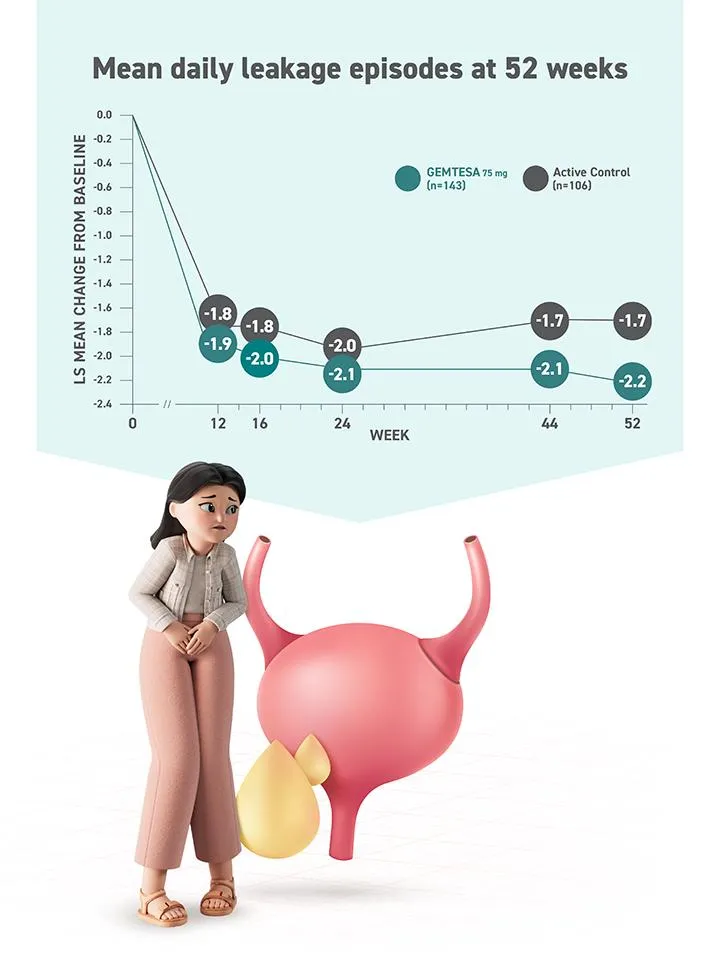
  • •Leakage episodes: Uncontrollable urine leaks
  • •Urgency: "Gotta-go" now even when the bladder isn't full
  • •Frequency: "Gotta-go" often — more than 8 times per day

It is not known if GEMTESA is safe and effective in children.

7. Why might my healthcare professional decide that GEMTESA is a good treatment option for me?

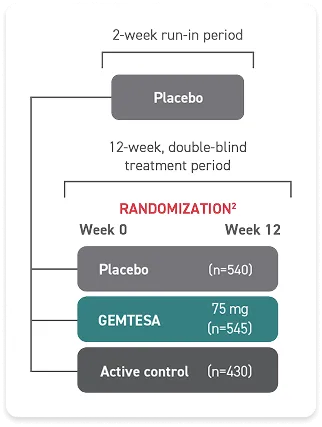
Your doctor may recommend GEMTESA based on its proven efficacy and safety profile observed in clinical trials.

8. How does GEMTESA work?

GEMTESA is a type of medication called a "beta-3 agonist," which is designed to help relax your bladder muscle so it can hold more urine. This may help to reduce the urgent need to run to the bathroom and the number of leakage episodes you may experience.

9. When can I expect to see results?

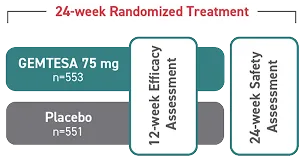
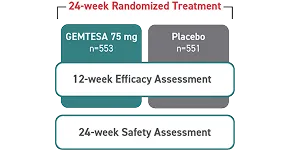
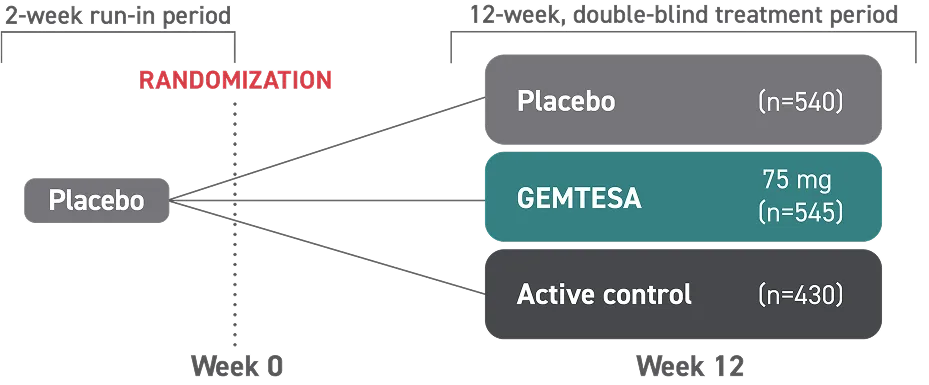
Based on the findings in clinical trials, you may expect to see results from GEMTESA at 12 weeks (3 months). Individual results may vary.

10. What are the possible side effects?

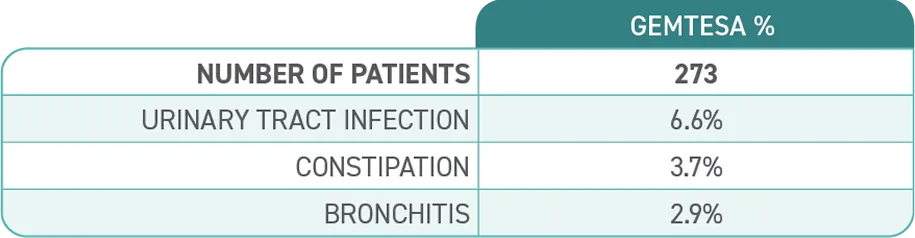
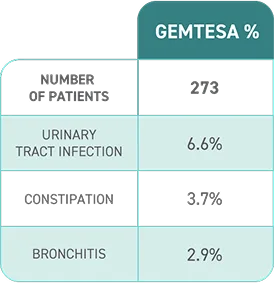
The most common side effects of GEMTESA at 12 weeks in a clinical trial were headache, nasal congestion, sore throat or runny nose, diarrhea, nausea, and upper respiratory tract infection. These are not all the possible side effects of GEMTESA. For more information, ask your doctor or pharmacist.

11. Do I need to take GEMTESA every day?

GEMTESA is intended to be taken once daily. It comes in a single-dose pill that can be taken whole with a glass of water with or without food. In adults, GEMTESA tablets may be crushed, mixed with a tablespoon (~15 mL) of applesauce and taken immediately with a glass of water.

12. Is there financial copay support for GEMTESA?

Savings and support may be available for eligible commercially insured patients. You may pay as little as $10 for each 30-day supply or as little as $0 for each 90-day supply* if you have commercial insurance (government plans like Medicare or Medicaid are not eligible) or GEMTESA is covered by your plan. You may pay as little as $95 for each 30-day supply if you have commercial insurance (government plans like Medicare or Medicaid are not eligible) or if GEMTESA is not covered by your plan. Visit the Savings Program and Support section to learn more.


*Restrictions and maximum saving limits apply. Coverage and out-of-pocket costs may vary. Offer not valid for patients participating in Medicare, Medicaid, or other government healthcare programs. See full Program Terms, Conditions, and Eligibility Criteria.
GEMTESA® is a prescription medicine used to treat the following symptoms due to a condition called overactive bladder (OAB) in adults, and in adult males taking medicine for benign prostatic hyperplasia (BPH): leakage episodes, urgency, and frequency.

IMPORTANT SAFETY INFORMATION & USE

Do not take GEMTESA if you are allergic to vibegron or any of the ingredients in GEMTESA.

Before you take GEMTESA, tell your doctor about all your medical conditions, including if you have liver problems; have kidney problems; have trouble emptying your bladder or you have a weak urine stream; take medicines that contain digoxin; are pregnant or plan to become pregnant (it is not known if GEMTESA will harm your unborn baby; talk to your doctor if you are pregnant or plan to become pregnant); are breastfeeding or plan to breastfeed (it is not known if GEMTESA passes into your breast milk; talk to your doctor about the best way to feed your baby if you take GEMTESA).

Tell your doctor about all the medicines you take, including prescription and over-the-counter medicines, vitamins, and herbal supplements. Know the medicines you take. Keep a list of them to show your doctor and pharmacist when you get a new medicine.

What are the possible side effects of GEMTESA?
GEMTESA may cause serious side effects including:

  • inability to empty your bladder (urinary retention). GEMTESA may increase your chances of not being able to empty your bladder, especially if you have bladder outlet obstruction or take other medicines for treatment of overactive bladder. Tell your doctor right away if you are unable to empty your bladder.
  • angioedema. GEMTESA may cause an allergic reaction with swelling of the lips, face, tongue, or throat, with or without difficulty breathing and may be life-threatening. Stop using GEMTESA and get emergency medical help right away if you have symptoms of angioedema or trouble breathing.

The most common side effects of GEMTESA include headache, urinary tract infection, nasal congestion, sore throat or runny nose, diarrhea, nausea and upper respiratory tract infection. These are not all the possible side effects of GEMTESA. For more information, ask your doctor or pharmacist.

Call your doctor for medical advice about side effects. You may report side effects to FDA at 1-800-FDA-1088.

Please see full Prescribing Information and Patient Product Information for GEMTESA.

What is GEMTESA?

GEMTESA® is a prescription medicine used to treat the following symptoms due to a condition called overactive bladder in adults, and in adult males taking medicine for benign prostatic hyperplasia (BPH):

  • urge urinary incontinence: a strong need to urinate with leaking or wetting accidents
  • urgency: the need to urinate right away
  • frequency: urinating often

It is not known if GEMTESA is safe and effective in children.

IMPORTANT SAFETY INFORMATION & USE

Do not take GEMTESA if you are allergic to vibegron or any of the ingredients in GEMTESA.

Before you take GEMTESA, tell your doctor about all your medical conditions, including if you have liver problems; have kidney problems; have trouble emptying your bladder or you have a weak urine stream; take medicines that contain digoxin; are pregnant or plan to become pregnant (it is not known if GEMTESA will harm your unborn baby; talk to your doctor if you are pregnant or plan to become pregnant); are breastfeeding or plan to breastfeed (it is not known if GEMTESA passes into your breast milk; talk to your doctor about the best way to feed your baby if you take GEMTESA).

Tell your doctor about all the medicines you take, including prescription and over-the-counter medicines, vitamins, and herbal supplements. Know the medicines you take. Keep a list of them to show your doctor and pharmacist when you get a new medicine.

What are the possible side effects of GEMTESA?
GEMTESA may cause serious side effects including:

  • inability to empty your bladder (urinary retention). GEMTESA may increase your chances of not being able to empty your bladder, especially if you have bladder outlet obstruction or take other medicines for treatment of overactive bladder. Tell your doctor right away if you are unable to empty your bladder.
  • angioedema. GEMTESA may cause an allergic reaction with swelling of the lips, face, tongue, or throat, with or without difficulty breathing and may be life-threatening. Stop using GEMTESA and get emergency medical help right away if you have symptoms of angioedema or trouble breathing.

The most common side effects of GEMTESA include headache, urinary tract infection, nasal congestion, sore throat or runny nose, diarrhea, nausea and upper respiratory tract infection. These are not all the possible side effects of GEMTESA. For more information, ask your doctor or pharmacist.

Call your doctor for medical advice about side effects. You may report side effects to FDA at 1-800-FDA-1088.

Please see full Prescribing Information and Patient Product Information for GEMTESA.

For U.S. residents only

You are encouraged to report side effects and product complaints associated with GEMTESA by calling 1-833-876-8268.

Go to us.sumitomo-pharma.com/

is a registered trademark of Sumitomo Pharma Co., Ltd., used under license. SUMITOMO PHARMA is a trademark of Sumitomo Pharma Co., Ltd., used under license. SUMITOMO is a registered trademark of Sumitomo Chemical Co., Ltd., used under license. Sumitomo Pharma America, Inc. is a U.S. subsidiary of Sumitomo Pharma Co., Ltd.

GEMTESA and its logo are registered trademarks of Sumitomo Pharma Co., Ltd., used under license.

©2026 Sumitomo Pharma America, Inc. All rights reserved. GEM-US-0250-26 10/26